Interface of an event source: something that reads platform input and reports it as utility::event::Event objects through a callback. More...
#include <headers/guillaume/event_handler.hpp>
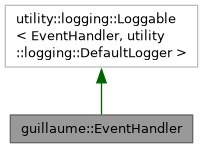
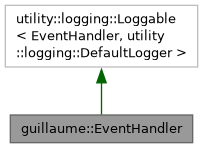
Public Types | |
| using | Handler |
| The callback type: a function called with each event read from the platform. | |
Public Member Functions | |
| EventHandler (void) | |
| Create an event source with no callback. | |
| virtual | ~EventHandler (void)=default |
| Virtual destructor. | |
| void | setEventCallback (const Handler &callback) |
| Choose the function that receives the events. | |
| virtual void | pollEvents (void)=0 |
| Read the events the platform has pending and report each one through the callback. | |
Protected Member Functions | |
| Handler & | getEventCallback (void) |
| Get the callback, for pollEvents() to call. | |
Detailed Description
Interface of an event source: something that reads platform input and reports it as utility::event::Event objects through a callback.
An implementation overrides pollEvents() to read what the platform has pending, convert it and call the callback once per event. The owner sets the callback, typically to forward to event::EventBus::publish.
- Note
- Application does not use this class: it receives its events from utility::Engine (setEventCallback and pollEvents), which has the same shape.
- See also
- event::EventBus
Definition at line 65 of file event_handler.hpp.
Member Typedef Documentation
◆ Handler
The callback type: a function called with each event read from the platform.
It receives the shared pointer by reference and may move from it.
Definition at line 76 of file event_handler.hpp.
Member Function Documentation
◆ getEventCallback()
|
protected |
Get the callback, for pollEvents() to call.
- Returns
- Reference to the callback. It is an empty function until setEventCallback() is called: test it before calling it.
◆ pollEvents()
|
pure virtual |
Read the events the platform has pending and report each one through the callback.
Implemented by each event source. It is meant to be called once per frame and to return without waiting when nothing is pending.
◆ setEventCallback()
| void guillaume::EventHandler::setEventCallback | ( | const Handler & | callback | ) |
Choose the function that receives the events.
- Parameters
-
callback The function pollEvents() calls once per event. It replaces the previous one; an empty function removes it.
The documentation for this class was generated from the following file:
- headers/guillaume/event_handler.hpp
