Helpers that position a child relative to its parent by writing the child's components::Transform. More...
Functions | |
| utility::graphic::PoseF | poseOf (ecs::ComponentRegistry ®istry, const ecs::Entity::Identifier &identifier) |
| Read the pose (position and orientation) of an entity. | |
| void | placeChild (ecs::ComponentRegistry ®istry, const ecs::Entity::Identifier &parentIdentifier, const ecs::Entity::Identifier &childIdentifier, const utility::graphic::PositionF &offset, std::uint32_t parentLayer) |
| Place a child at an offset from the position of its parent. | |
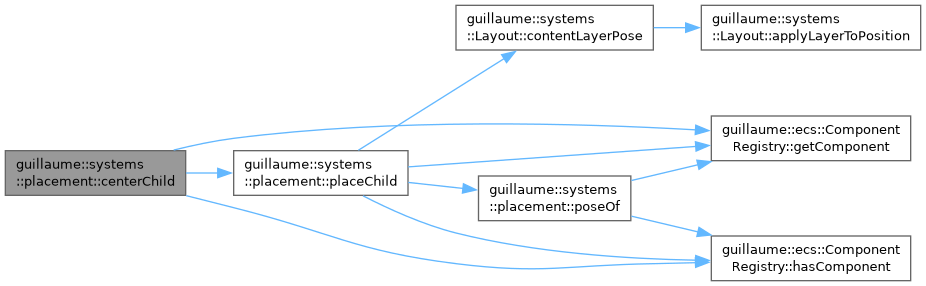
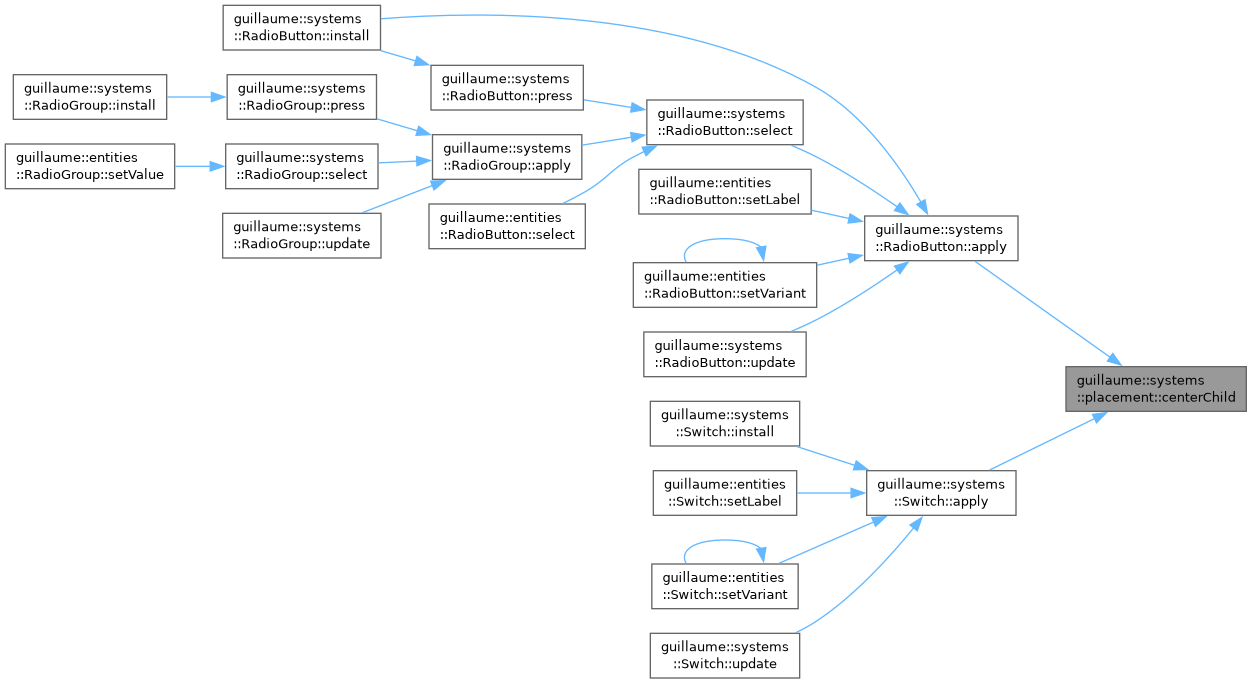
| void | centerChild (ecs::ComponentRegistry ®istry, const ecs::Entity::Identifier &parentIdentifier, const ecs::Entity::Identifier &childIdentifier, std::uint32_t parentLayer) |
| Center a child inside the bound of its parent, on both axes. | |
| void | placeNormalized (ecs::ComponentRegistry ®istry, const ecs::Entity::Identifier &parentIdentifier, const ecs::Entity::Identifier &childIdentifier, float normalized, float inset, std::uint32_t parentLayer) |
| Place a child along the width of its parent from a 0 to 1 value, vertically centered. | |
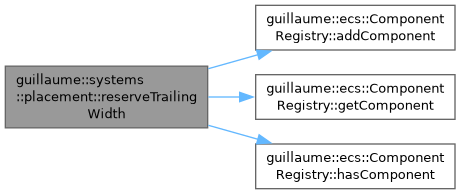
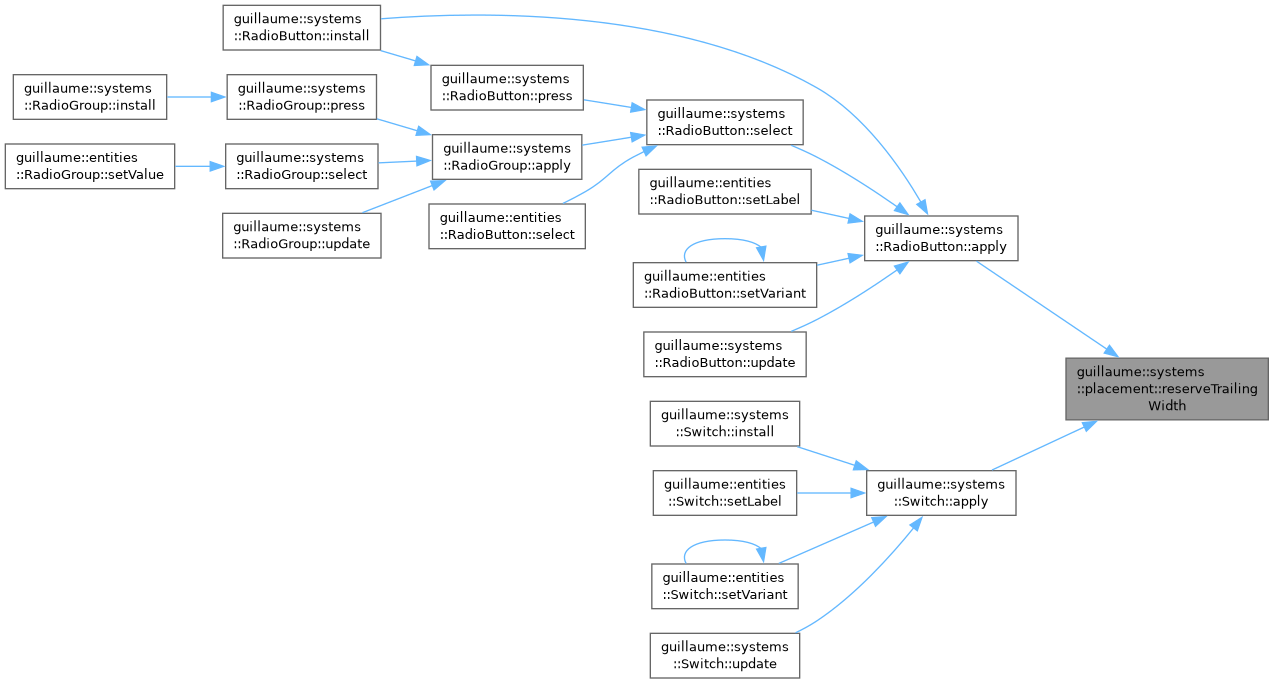
| void | reserveTrailingWidth (ecs::ComponentRegistry ®istry, const ecs::Entity::Identifier &identifier, float width) |
| Reserve layout room after an entity's Bound. | |
Detailed Description
Helpers that position a child relative to its parent by writing the child's components::Transform.
Function Documentation
◆ centerChild()
|
inline |
Center a child inside the bound of its parent, on both axes.
Does nothing when the parent or the child has no components::Bound. Both bounds must be up to date: call it after the child has been measured and the parent laid out.
- Parameters
-
registry The registry holding the components. parentIdentifier The entity the child is centered in. childIdentifier The entity whose components::Transform is written. parentLayer The tree depth of the parent, as returned by systems::Layout::layerOf.
Definition at line 154 of file placement_helpers.hpp.
◆ placeChild()
|
inline |
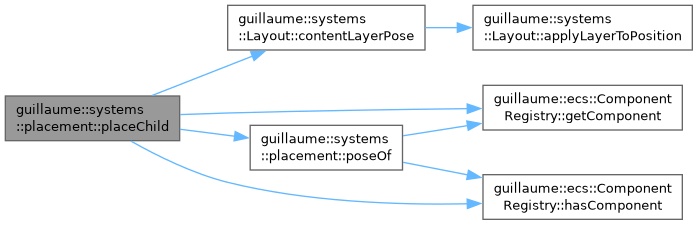
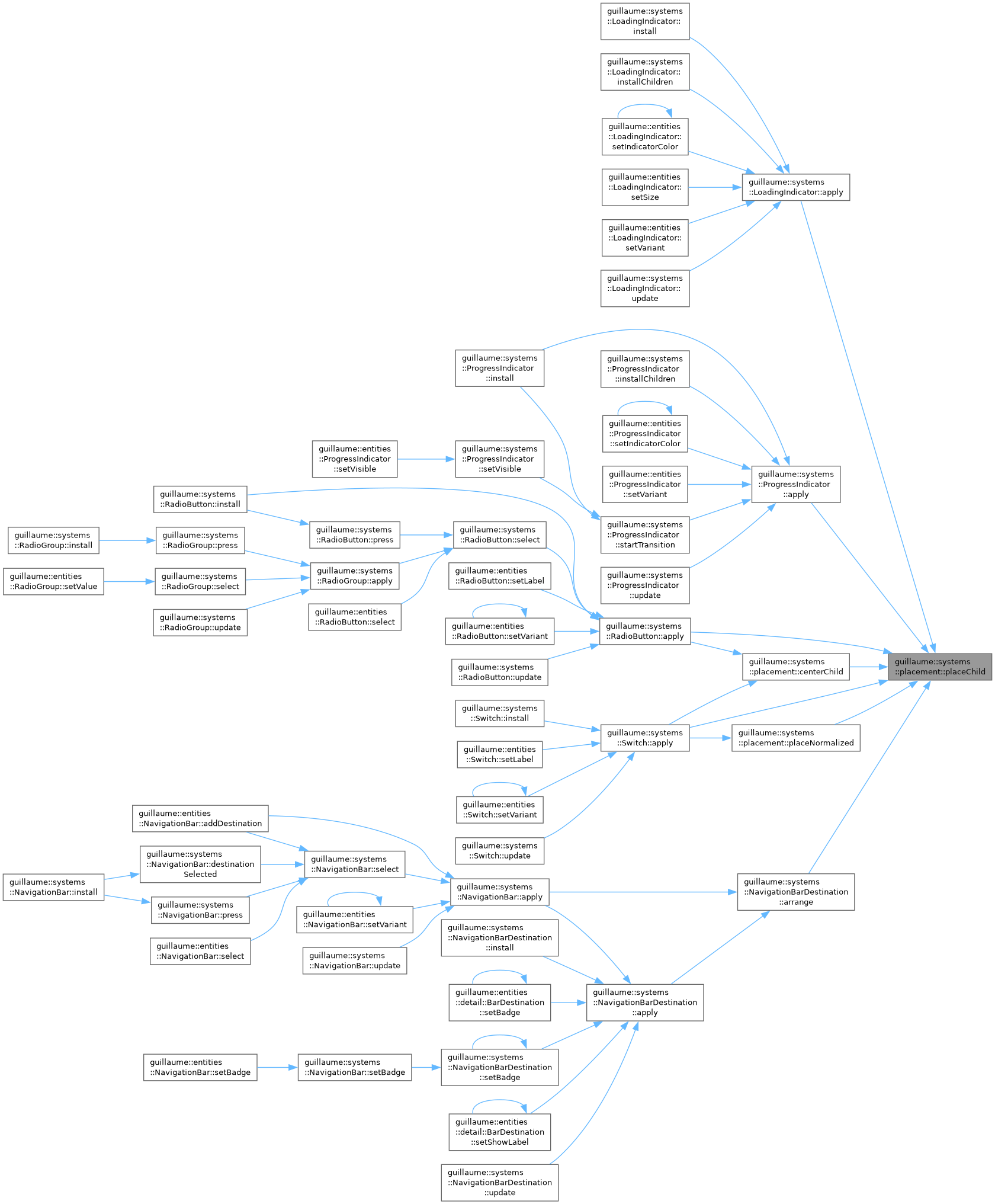
Place a child at an offset from the position of its parent.
Writes the pose of the child: the parent position plus the offset, with the parent orientation, moved toward the viewer by systems::Layout::contentLayerPose so the child never z-fights with the surface of the parent. Does nothing when the child has no components::Transform.
- Parameters
-
registry The registry holding the components. parentIdentifier The entity the child is placed against. Without a components::Transform it counts as a default pose. childIdentifier The entity whose components::Transform is written. offset The offset from the parent position, in dp. Only x and y are used; the depth comes from parentLayer. parentLayer The tree depth of the parent, as returned by systems::Layout::layerOf.
Definition at line 117 of file placement_helpers.hpp.
◆ placeNormalized()
|
inline |
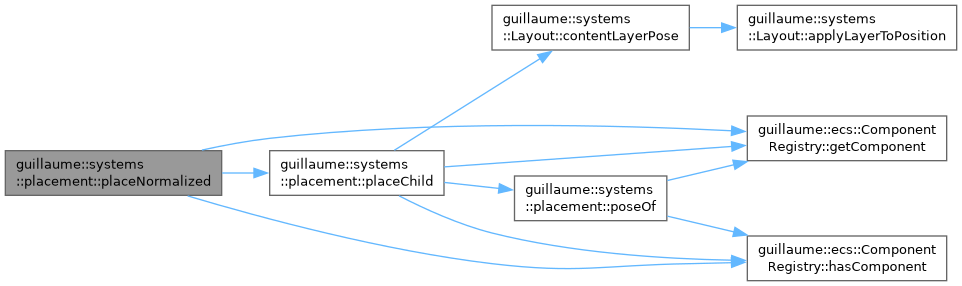
Place a child along the width of its parent from a 0 to 1 value, vertically centered.
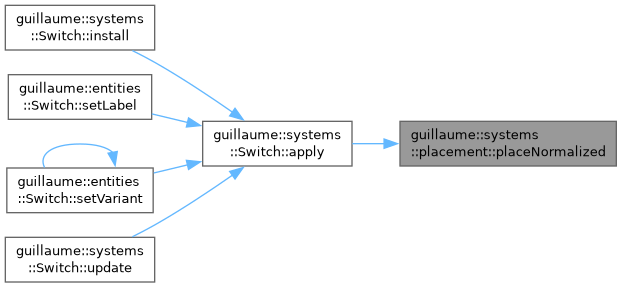
0 puts the child against the left inset, 1 against the right inset. systems::Switch places its handle this way (0 when off, 1 when on). Does nothing when the parent or the child has no components::Bound.
- Parameters
-
registry The registry holding the components. parentIdentifier The entity the child travels in. childIdentifier The entity whose components::Transform is written. normalized The position along the available travel, 0 to 1. The value is not clamped. inset The space kept free at the left and right edges of the parent, in dp. When the child is wider than what remains, it stays against the left inset. parentLayer The tree depth of the parent, as returned by systems::Layout::layerOf.
Definition at line 197 of file placement_helpers.hpp.
◆ poseOf()
|
inline |
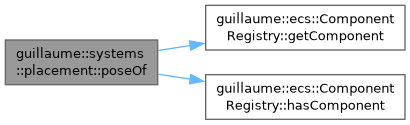
Read the pose (position and orientation) of an entity.
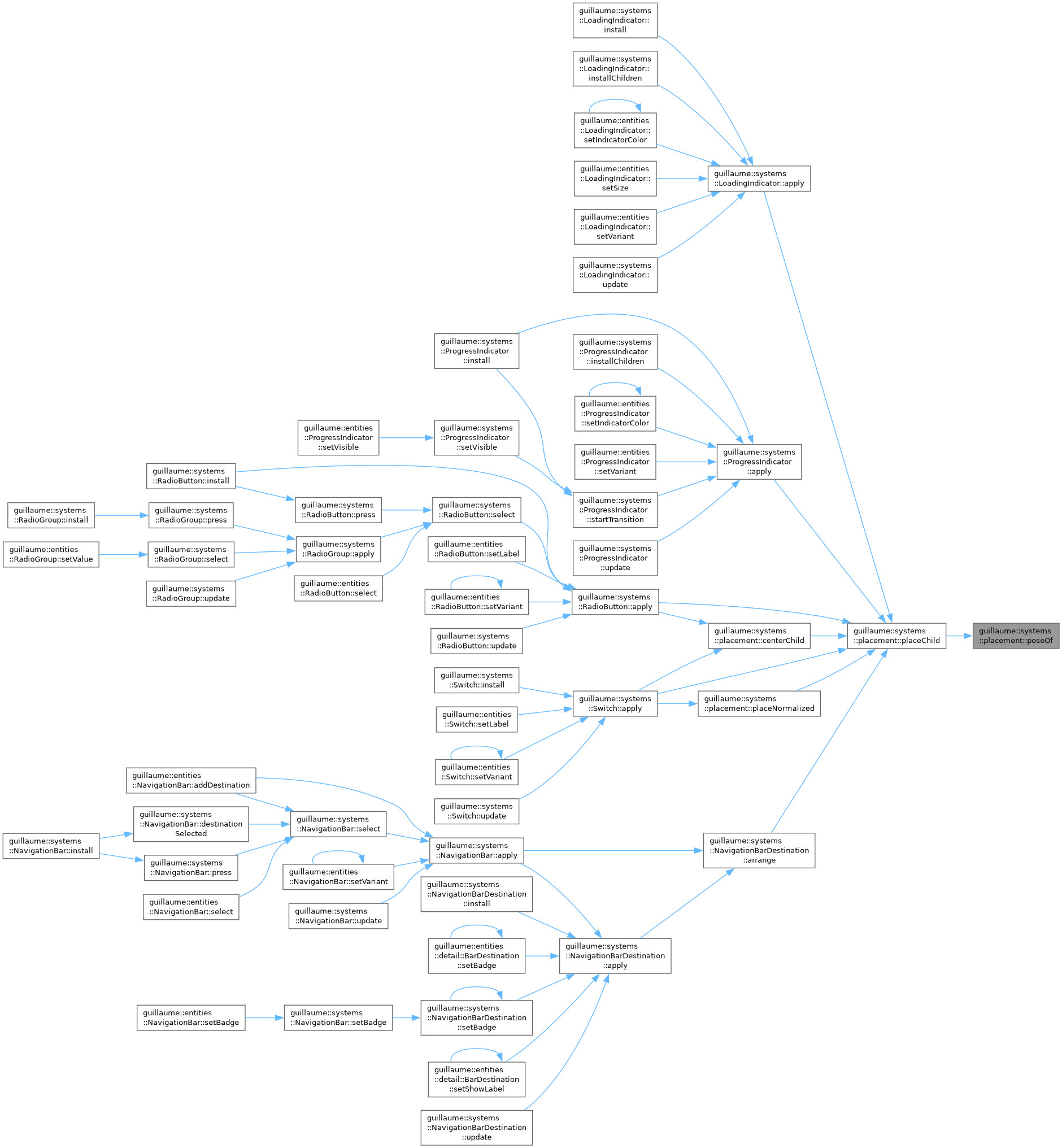
The other helpers use it to get the pose of the parent a child is placed against.
- Parameters
-
registry The registry holding the components. identifier The entity whose components::Transform is read.
- Returns
- The pose of the entity, or a default-constructed pose when the entity has no components::Transform.
Definition at line 81 of file placement_helpers.hpp.
◆ reserveTrailingWidth()
|
inline |
Reserve layout room after an entity's Bound.
For a widget that draws a small shape and places a child beside it (a checkbox and its label): the parent layout then keeps that room free instead of putting the next widget over the child. Adds the components::LayoutExtent when needed.
- Parameters
-
registry The registry holding the components. identifier The widget entity. width The room after the Bound, in dp; 0 or less releases it.
Definition at line 236 of file placement_helpers.hpp.