The rules of a chip: pressing it, selecting it, closing it, coloring it and arranging its icons and label. More...
#include <headers/guillaume/systems/chip.hpp>
Public Member Functions | |
| Chip (void) | |
| Create the system for the Layout phase, matching entities that have a components::Chip. | |
| ~Chip (void) override=default | |
| Default destructor. | |
| void | update (const ecs::Entity::Identifier &entityIdentifier) override |
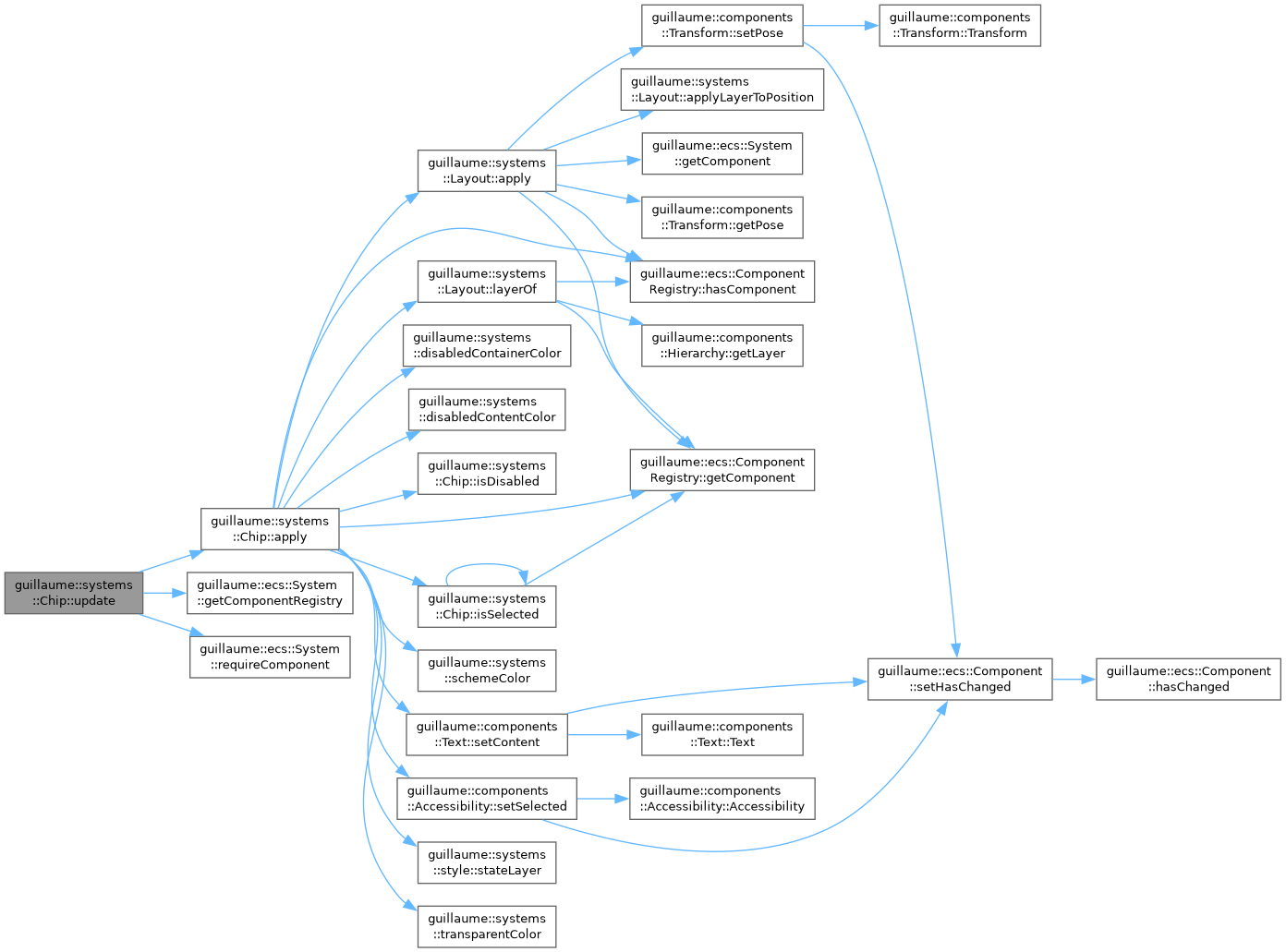
| Frame entry point: call apply on one chip. | |
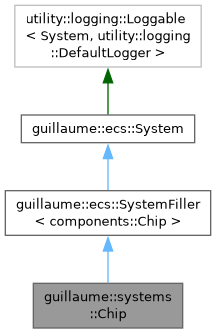
| Public Member Functions inherited from guillaume::ecs::SystemFiller< components::Chip > | |
| SystemFiller (Phase phase) | |
| Create the system and set its signature from ComponentTypes. | |
| virtual | ~SystemFiller (void)=default |
| Virtual destructor. | |
| Public Member Functions inherited from guillaume::ecs::System | |
| System (Phase phase) | |
| Create a system that runs in a given phase, with an empty signature. | |
| virtual | ~System (void)=default |
| Virtual destructor. | |
| Phase | getPhase (void) const noexcept |
| Get the phase of the frame in which the system runs. | |
| Entity::Signature | getSignature (void) const noexcept |
| Get the component types an entity must declare to be visited by this system. | |
| void | routine (ecs::ComponentRegistry &componentRegistry, ecs::EntityRegistry &entityRegistry, const ecs::EntityTreeTraveler &traveler) |
| Run the system once over a scene: prepare(), update() on each matching entity, cleanup(). | |
| void | bindComponentRegistry (ecs::ComponentRegistry &componentRegistry) |
| Bind a component registry so update() can be called directly, without routine(). | |
| void | unbindComponentRegistry (void) |
| Drop the binding made by bindComponentRegistry(). | |
| virtual void | prepare (void) |
| Called once per pass, before the first update(). | |
| virtual void | cleanup (void) |
| Called once per pass, after the last update(). | |
Static Public Member Functions | |
| static void | install (ecs::ComponentRegistry &componentRegistry, const ecs::Entity::Identifier &entityIdentifier) |
| Make an entity behave as a chip. | |
| static void | installCloseIcon (ecs::ComponentRegistry &componentRegistry, const ecs::Entity::Identifier &entityIdentifier) |
| Make the trailing icon of a chip a close button. | |
| static void | apply (ecs::ComponentRegistry &componentRegistry, const ecs::Entity::Identifier &entityIdentifier) |
| Draw one chip from its components and arrange its children. | |
| static void | press (ecs::ComponentRegistry &componentRegistry, const ecs::Entity::Identifier &entityIdentifier) |
| Press the chip as a click does. | |
| static void | close (ecs::ComponentRegistry &componentRegistry, const ecs::Entity::Identifier &entityIdentifier) |
| Press the close icon of the chip as a click does. | |
| static void | setSelected (ecs::ComponentRegistry &componentRegistry, const ecs::Entity::Identifier &entityIdentifier, bool selected) |
| Select or deselect the chip from code and show it at once. | |
| static bool | isSelected (const ecs::ComponentRegistry &componentRegistry, const ecs::Entity::Identifier &entityIdentifier) |
| Whether the chip is selected. | |
| static void | setDisabled (ecs::ComponentRegistry &componentRegistry, const ecs::Entity::Identifier &entityIdentifier, bool disabled) |
| Enable or disable the chip and show it at once. | |
| static bool | isDisabled (const ecs::ComponentRegistry &componentRegistry, const ecs::Entity::Identifier &entityIdentifier) |
| Whether the chip ignores input and is drawn disabled. | |
| static std::string | leadingGlyph (const ecs::ComponentRegistry &componentRegistry, const ecs::Entity::Identifier &entityIdentifier) |
| Get the name of the glyph the leading icon of the chip should show. | |
| static bool | needsCheckIcon (const ecs::ComponentRegistry &componentRegistry, const ecs::Entity::Identifier &entityIdentifier) |
| Whether the widget class should build a selected check child for this chip. | |
| static bool | needsCloseIcon (const ecs::ComponentRegistry &componentRegistry, const ecs::Entity::Identifier &entityIdentifier) |
| Whether the widget class should build a trailing close icon child for this chip. | |
Additional Inherited Members | |
| Protected Member Functions inherited from guillaume::ecs::System | |
| template<InheritFromComponent... ComponentTypes> | |
| void | setSignature (void) |
| Replace the signature by the one made of the given component types. | |
| ecs::EntityRegistry & | getEntityRegistry (void) |
| Get the entity registry of the scene being processed. | |
| const ecs::EntityRegistry & | getEntityRegistry (void) const |
| Get the entity registry of the scene being processed, read-only. | |
| ecs::ComponentRegistry & | getComponentRegistry (void) |
| Get the component registry of the scene being processed. | |
| const ecs::ComponentRegistry & | getComponentRegistry (void) const |
| Get the component registry of the scene being processed, read-only. | |
| template<InheritFromComponent ComponentType> | |
| bool | hasComponent (const ecs::Entity::Identifier &entityIdentifier) const |
| Tell whether an entity has a component, in the bound registry. | |
| template<InheritFromComponent ComponentType> | |
| ComponentType & | getComponent (const ecs::Entity::Identifier &entityIdentifier) |
| Get a component of an entity from the bound registry, to read or modify it. | |
| template<InheritFromComponent ComponentType> | |
| const ComponentType & | getComponent (const ecs::Entity::Identifier &entityIdentifier) const |
| Get a component of an entity from the bound registry, read-only. | |
| template<InheritFromComponent ComponentType> | |
| bool | requireComponent (const ecs::Entity::Identifier &entityIdentifier) |
| Tell whether an entity has a component, and log a warning naming the entity and the component when it does not. | |
Detailed Description
The rules of a chip: pressing it, selecting it, closing it, coloring it and arranging its icons and label.
The chip entity is the rounded container, a horizontal layout. Its leading icon, selected check, label and trailing close icon are optional child entities, recorded by identifier in components::Chip. Whether it is selected is the flag of components::Selectable; whether it is disabled is the enabled flag of components::StyleState.
- Reads: components::Chip (variant, mode, label, options, child identifiers), components::Selectable, the hover, press and enabled state, the active theme.
- Writes: the chip's components::Color, components::Borders, components::Elevation, components::Accessibility (label and selected state), the padding and the children of its components::Layout, which it then arranges through systems::Layout::apply; the components::Color of each child and the text of the label. The actions also write components::Selectable and the enabled flag.
- Phase: Layout, registered after systems::Layout. The children were measured in the Measure phase of the same frame.
This system never creates a child: leadingGlyph, needsCheckIcon and needsCloseIcon tell the widget class (entities::Chip) which children to build. While the selected check is shown, it takes the place of the leading icon in the layout.
- See also
- guillaume::components::Chip, guillaume::entities::Chip, guillaume::systems::interaction
Constructor & Destructor Documentation
◆ Chip()
| guillaume::systems::Chip::Chip | ( | void | ) |
Create the system for the Layout phase, matching entities that have a components::Chip.
Definition at line 107 of file chip.cpp.

Member Function Documentation
◆ apply()
|
static |
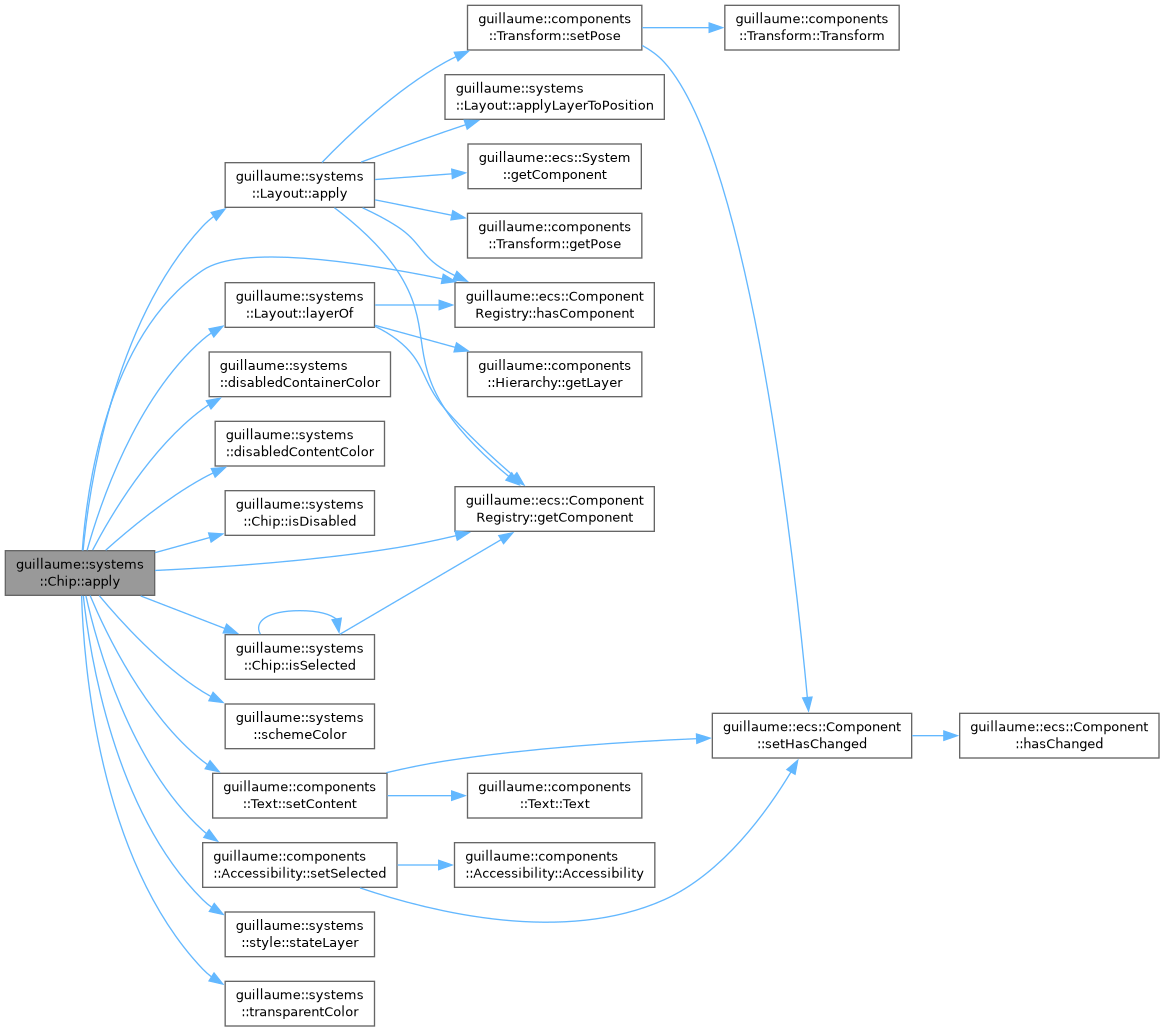
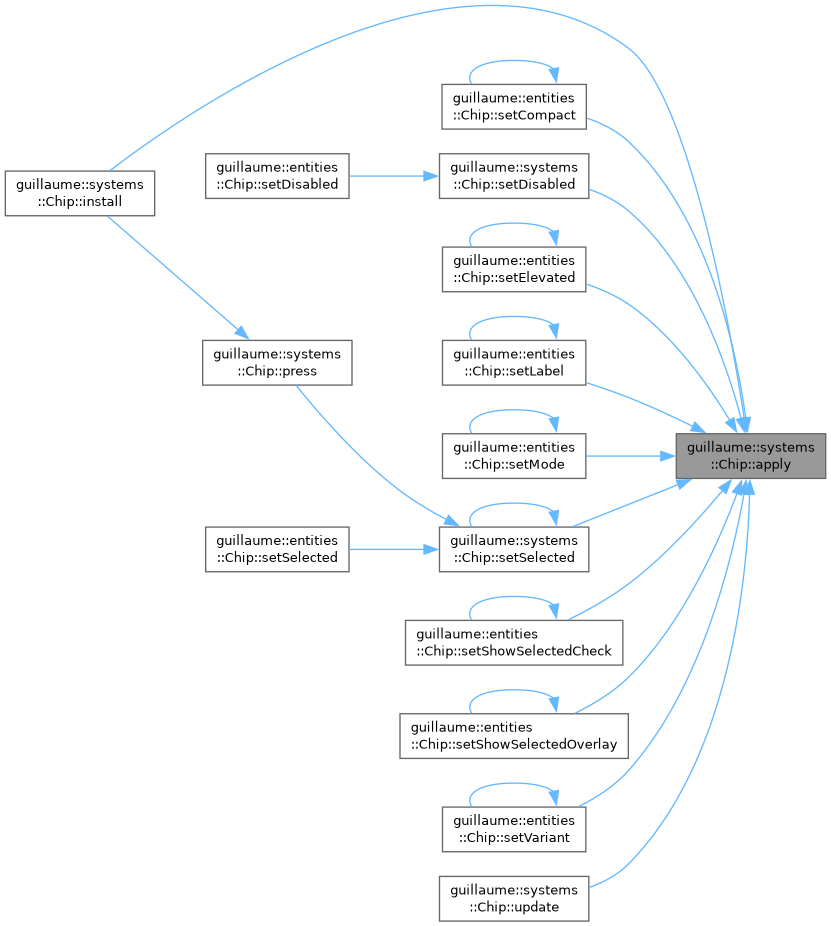
Draw one chip from its components and arrange its children.
- Container: SecondaryContainer for a Flat chip and for any selected chip; transparent with a 1 dp Outline border for an unselected Outlined chip. A selected chip gets an extra tint when the component asks for the selected overlay, and the hover or press tint comes on top.
- Content: the label and trailing icon use the content color of that container; the leading icon and the check are Primary, or the content color when selected.
- Disabled: disabled container and content colors, no tint.
- Elevation: level 1 for an elevated, enabled chip, else level 0.
- Layout: padding of components::Chip::Padding, or CompactPadding for a compact chip; children in the order check or leading icon, label, trailing icon.
A chip whose component records no child at all keeps the layout children it was given.
The frame calls it through update. Call it yourself after writing components::Chip when the result must be visible before the next Layout phase; the setters of entities::Chip do.
- Parameters
-
componentRegistry The registry holding the components. entityIdentifier The chip entity. It must have components::Chip, components::Selectable, components::Color, components::Borders, components::Elevation, components::Layout and components::Accessibility.
Definition at line 256 of file chip.cpp.
◆ close()
|
static |
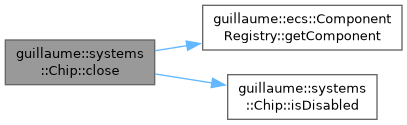
Press the close icon of the chip as a click does.
Calls the close callback of the component, and nothing else: the chip is not removed or hidden, the callback decides what closing means. Nothing is called when the chip is disabled or has no close callback.
- Parameters
-
componentRegistry The registry holding the components. entityIdentifier The chip entity.
Definition at line 240 of file chip.cpp.

◆ install()
|
static |
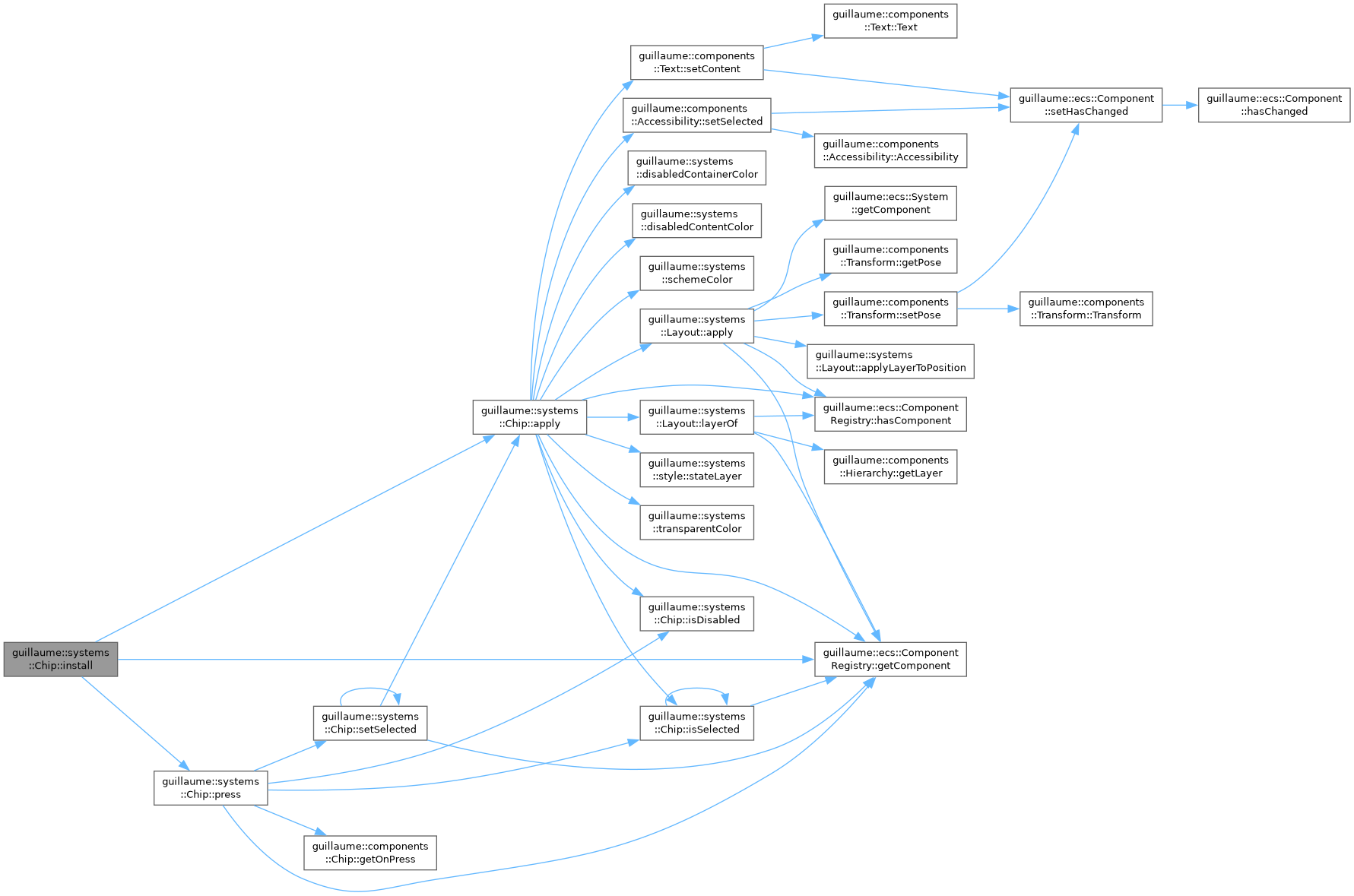
Make an entity behave as a chip.
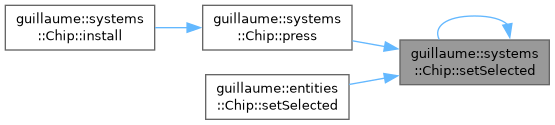
Calls systems::interaction::makeInteractive with the Button accessibility role, so a click or a hand press calls press and any hover or press change calls apply, and sets the selection handler of components::Selectable so a selection written from outside is drawn at once.
Call it once when the entity is built; entities::Chip does it for you. It does not style anything: call apply after it.
- Parameters
-
componentRegistry The registry holding the components. The handlers keep its address, so it must outlive the entity. entityIdentifier The chip entity. It must already have a components::Selectable.
Definition at line 112 of file chip.cpp.
◆ installCloseIcon()
|
static |
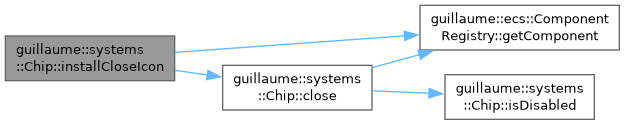
Make the trailing icon of a chip a close button.
Makes the trailing icon recorded in components::Chip interactive on its own (Button role, accessibility label "Close") so that pressing it calls close on the chip instead of pressing the chip. Call it after the trailing icon child has been created and recorded. Does nothing when the chip has no trailing icon.
- Parameters
-
componentRegistry The registry holding the components. The handler keeps its address, so it must outlive the entity. entityIdentifier The chip entity, not the icon.
Definition at line 134 of file chip.cpp.
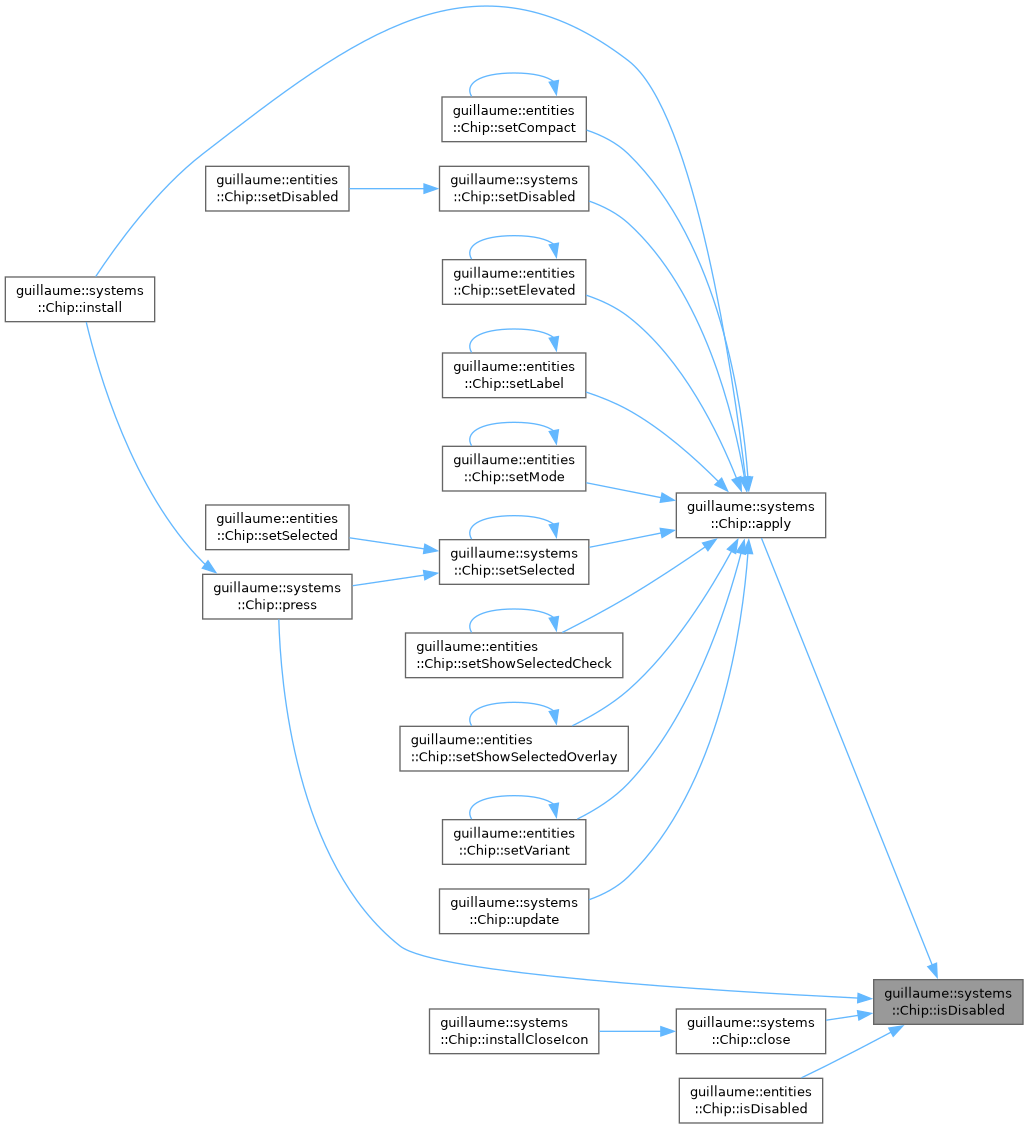
◆ isDisabled()
|
static |
Whether the chip ignores input and is drawn disabled.
- Parameters
-
componentRegistry The registry holding the components. entityIdentifier The chip entity.
- Returns
- True when the entity has a components::StyleState that is not enabled.
Definition at line 164 of file chip.cpp.
◆ isSelected()
|
static |
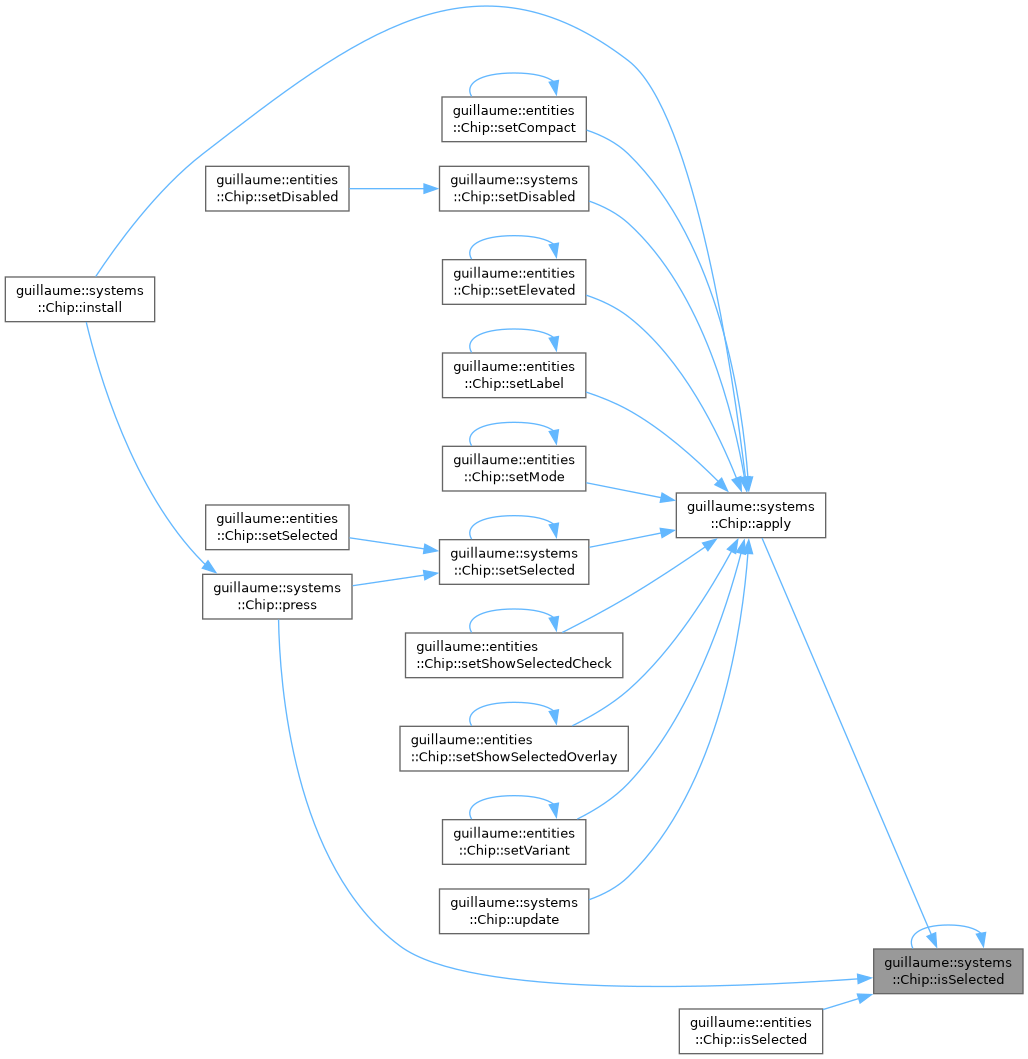
Whether the chip is selected.
- Parameters
-
componentRegistry The registry holding the components. entityIdentifier The chip entity. It must have a components::Selectable.
- Returns
- The selected flag of its components::Selectable.
Definition at line 156 of file chip.cpp.

◆ leadingGlyph()
|
static |
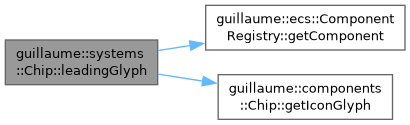
Get the name of the glyph the leading icon of the chip should show.
The widget class calls it to decide whether to build a leading icon child and with which glyph.
- Parameters
-
componentRegistry The registry holding the components. entityIdentifier The chip entity.
- Returns
- The glyph configured in components::Chip; components::Chip::DefaultAssistGlyph for an Assist chip without one; an empty string when the chip should have no leading icon.
Definition at line 171 of file chip.cpp.
◆ needsCheckIcon()
|
static |
Whether the widget class should build a selected check child for this chip.
- Parameters
-
componentRegistry The registry holding the components. entityIdentifier The chip entity.
- Returns
- True for the Filter variant, false for the others.
Definition at line 184 of file chip.cpp.

◆ needsCloseIcon()
|
static |
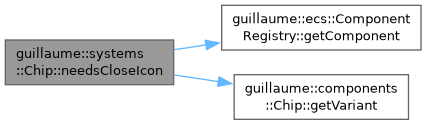
Whether the widget class should build a trailing close icon child for this chip.
- Parameters
-
componentRegistry The registry holding the components. entityIdentifier The chip entity.
- Returns
- True for the Input variant, or for any variant with a close callback set.
Definition at line 193 of file chip.cpp.
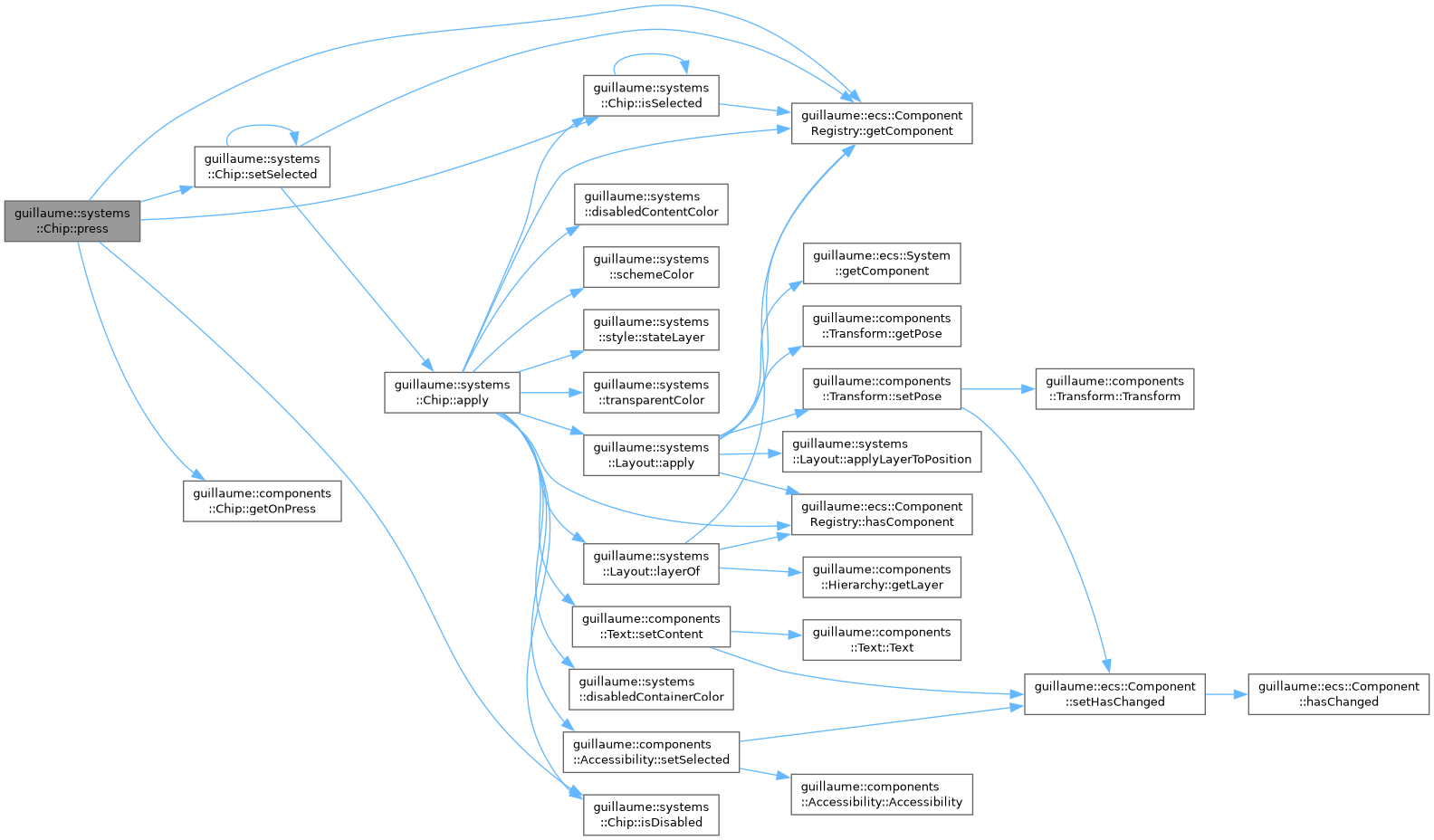
◆ press()
|
static |
Press the chip as a click does.
A Filter chip flips its selection and is redrawn; the other variants keep theirs. Then the press callback of the component is called. Nothing happens, and nothing is called, when the chip is disabled.
The handlers set by install call it; call it directly to simulate a click, for example in a test on a bare identifier.
- Parameters
-
componentRegistry The registry holding the components. entityIdentifier The chip entity.
Definition at line 220 of file chip.cpp.

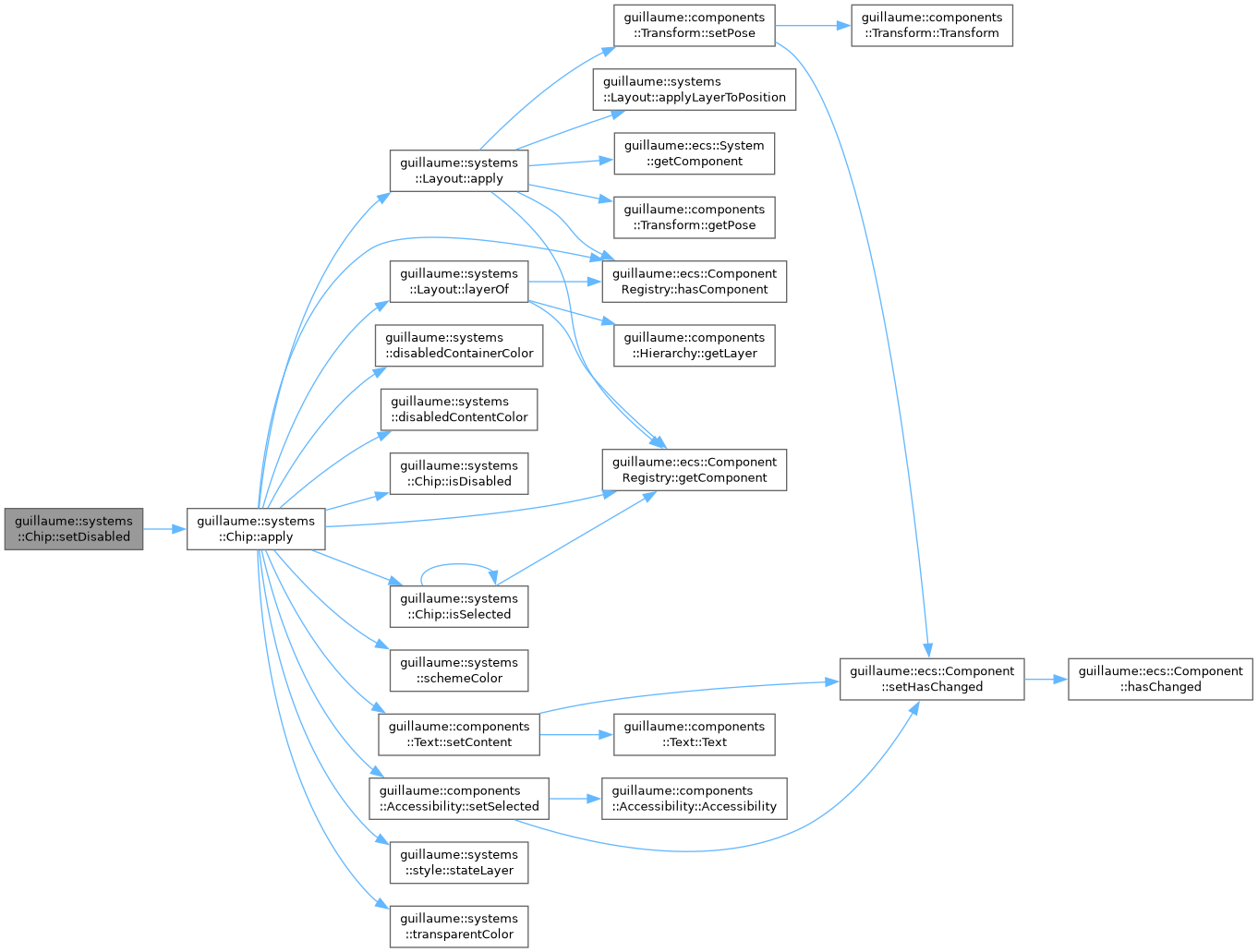
◆ setDisabled()
|
static |
Enable or disable the chip and show it at once.
Writes the enabled flag of components::StyleState (through systems::interaction::setEnabled), then calls apply. A disabled chip ignores press and close and is drawn with the disabled colors.
- Parameters
-
componentRegistry The registry holding the components. entityIdentifier The chip entity. disabled True to disable the chip, false to enable it.
Definition at line 212 of file chip.cpp.

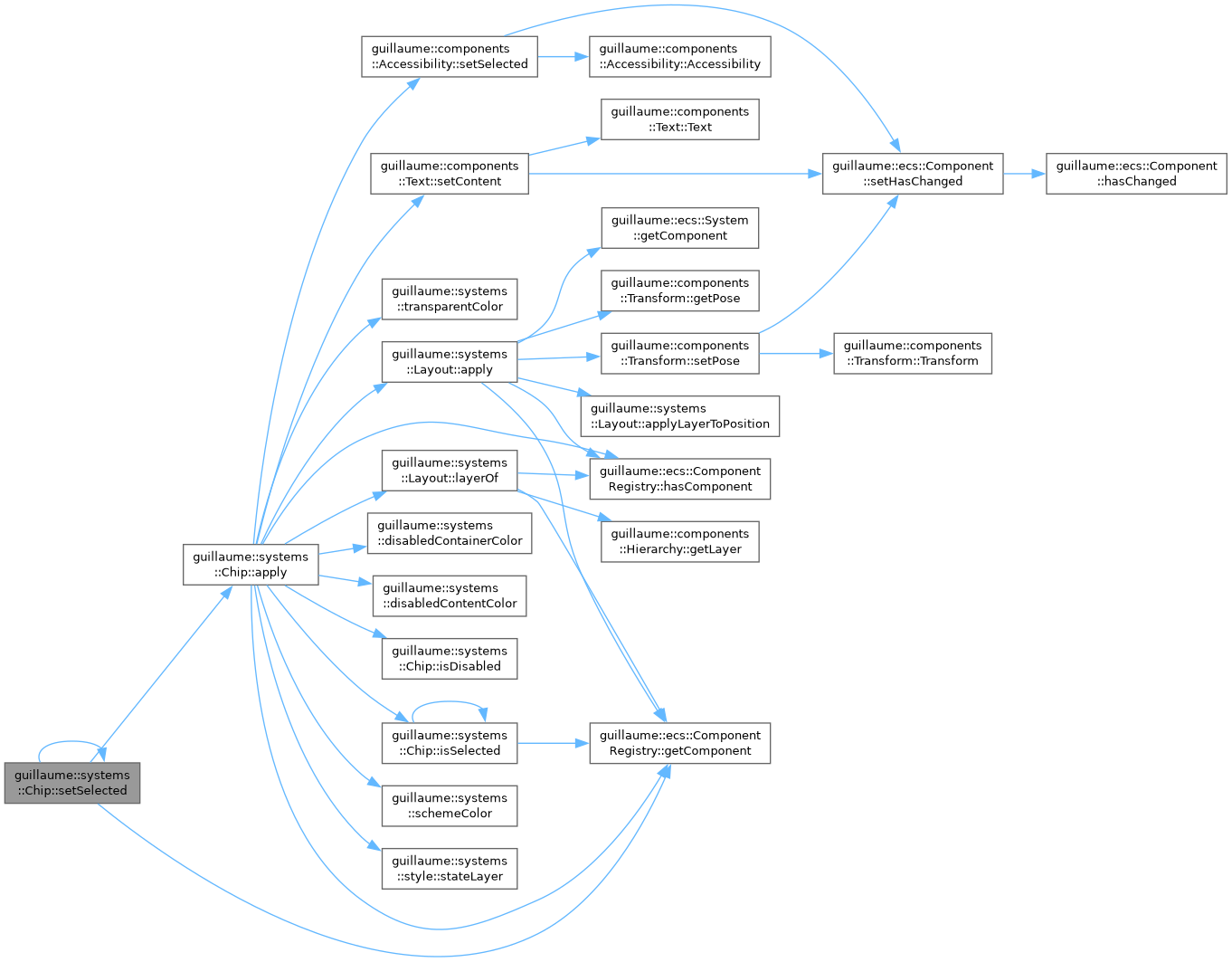
◆ setSelected()
|
static |
Select or deselect the chip from code and show it at once.
Writes the selected flag of components::Selectable, then calls apply. The press callback is not called, and the call works on any variant and on a disabled chip.
- Parameters
-
componentRegistry The registry holding the components. entityIdentifier The chip entity. selected True to select the chip, false to deselect it.
Definition at line 203 of file chip.cpp.
◆ update()
|
overridevirtual |
Frame entry point: call apply on one chip.
- Parameters
-
entityIdentifier The chip entity. An entity without a components::Chip is logged and skipped.
Implements guillaume::ecs::System.
Definition at line 340 of file chip.cpp.
The documentation for this class was generated from the following files:
